
Types of 3D Printing & Printer Technologies
Table of Contents
The types of 3D printing are usually counted by technology acronym — FDM, SLA, SLS, MJF, DLP, LPBF, DED, binder jetting — but the useful way to organize them is by the material state they work with: filament, resin, powder, or metal. Each family has its strengths, limits and cost profile, and choosing the right one is the difference between a prototype in a day and a production part that fails in the field. Here is the map, from the perspective of a factory that uses printing alongside CNC machining and injection molding.
FDM/FFF (fused deposition modeling) extrudes a plastic filament layer by layer — the cheapest and most common technology, best for form-fit prototypes, jigs and fixtures. Limits: visible layer lines, anisotropic strength (weak between layers), and a material set dominated by PLA, ABS, PETG, nylon and carbon-fiber-filled grades. Industrial FDM (large-format) makes production tooling and jigs. SLA/DLP (stereolithography / digital light processing) cures liquid resin with light — the highest-resolution and smoothest surface of the plastic family, ideal for master patterns, dental and jewelry models. Limits: resin cost, brittleness, and UV-curing post-processing.
Powder-Based: SLS, MJF and the Production Pair
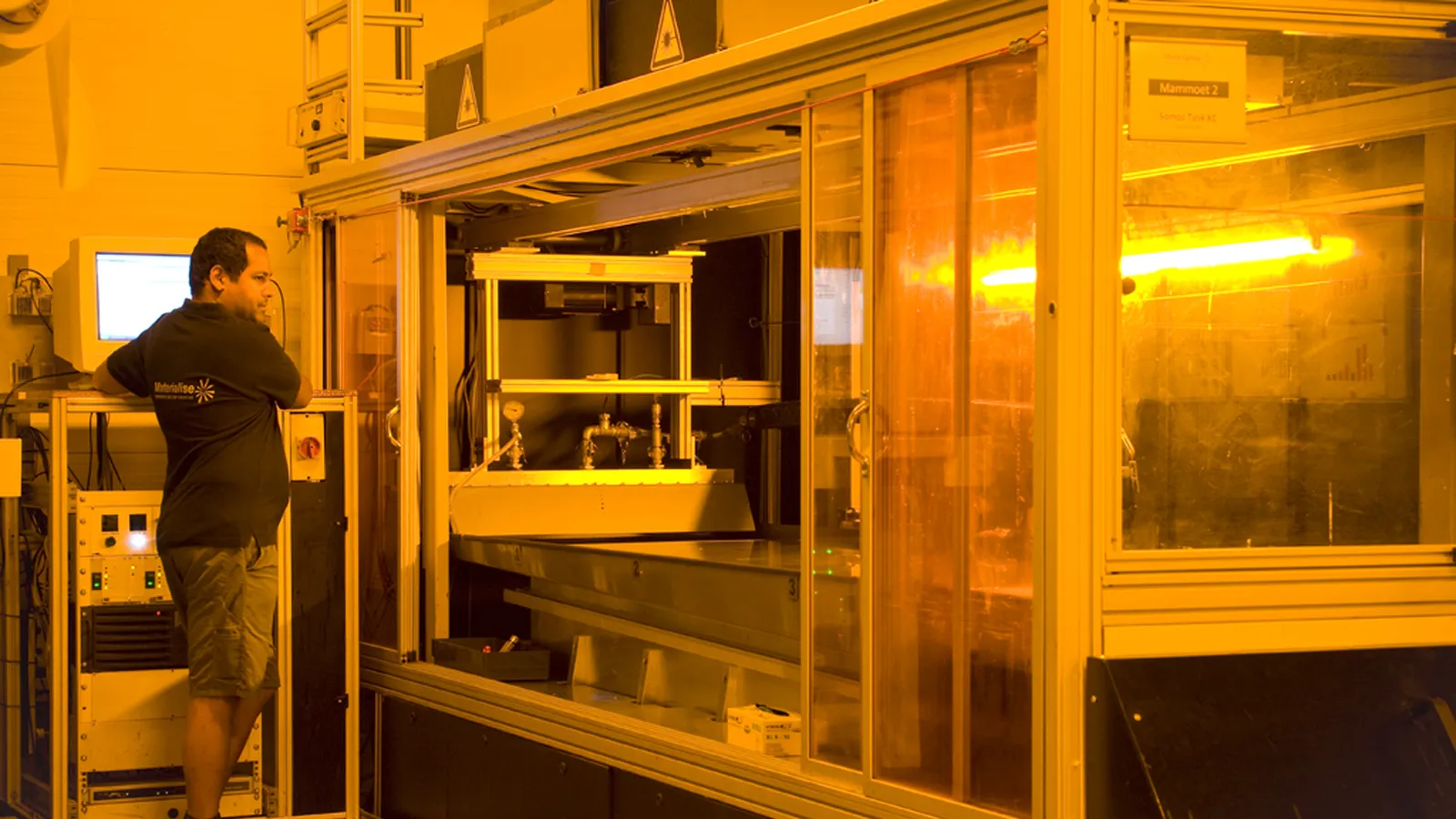
SLS (selective laser sintering) and MJF (multi jet fusion) fuse nylon powder into functional, support-free parts — the closest plastic printing gets to production injection-molded properties. Both produce durable parts with good chemical resistance and fatigue behavior, and both are used for end-use parts, hinges, clips and enclosures at low volume. The SLS-vs-MJF decision — isotropy, surface finish, material range — is covered in detail in our MJF vs SLS comparison. Powder-based printing has no support structures (the powder supports the part), which makes complex geometries and interlocking features possible for free.
For metal, the main production technologies are LPBF (laser powder bed fusion — the classic "metal 3D printing": titanium, aluminum, stainless, Inconel, with layer thicknesses of 20-60 µm) and binder jetting (powder bonded by a binder, then sintered — faster and cheaper for volume, with lower detail). DED (directed energy deposition) deposits metal onto existing parts — the repair and large-format option. Metal printing produces parts that need heat treatment, support removal and often CNC finishing of critical faces, which is why we always quote the post-processing chain with the print.
How to Choose: Geometry, Volume and Material
The selection logic: form and fit prototypes → FDM (cheapest) or SLA (finest detail); functional plastic parts → SLS or MJF; production volumes of plastic → injection molding (the printed part cost curve crosses the molded part cost at roughly 100-1,000 pieces, depending on geometry); metal prototypes and complex geometry → LPBF; simple metal parts and higher volume → CNC; very large metal or repairs → DED. The crossover math for each case is in our 3D printing vs injection molding guide.
As a market reference, on-demand printing services quote plastic prototypes in 2-5 days and metal in 5-10 days depending on post-processing (.
If you are choosing among printing technologies — or between printing and machining or molding — send us the part and the target volume. We will recommend the process and quote the options. Contact us to start.
The choosing process itself matters as much as the technology: the best process for your part depends on how the part will be used, and the answer changes with the volume. A clip that will be produced at 100,000 pieces should be printed for prototyping but molded for production; the same clip at 200 pieces may ship printed for its whole life. The decision is a crossover calculation — printed unit cost versus molded unit cost plus tooling amortization — and the crossover point is different for every geometry. That is the calculation we run with customers before recommending a process, and it is the calculation our 3D printing vs injection molding guide documents with examples.
Need a quote? Contact us — upload your 3D file for a fast DFM review.
NEXT STEP
Ready to Start Your Project?
Send us your requirements — our team responds within 24 hours. Pricing and a realistic lead time come with the reply.
Written by
Ray ChanExport Brand Manager · Injection Molding, Mold Making & DFM. Ray helps global importers and integrators source factory-direct plastic parts and tooling.