
Mechanical vs Chemical vs Electrochemical Machining
Table of Contents
Mechanical, chemical and electrochemical machining are three families of material removal that solve different problems. Mechanical machining (CNC milling, turning, drilling, grinding) removes material by cutting force — the most precise, most versatile, and the default for almost everything. Chemical machining (chemical milling, etching, photochemical machining) dissolves material with acid or etchant through a mask — no force, no heat-affected zone, ideal for thin sheets and features that cannot be cut. Electrochemical machining (ECM) removes material by anodic dissolution in an electrolyte — no tool contact, no heat, no burrs, ideal for hard materials and complex contours that would wear out cutting tools.
The hierarchy for most buyers: CNC machining handles 95% of parts; chemical and electrochemical machining are the specialists called in for thin, fragile, hardened or complex-geometry parts where cutting forces would damage the work. The comparison matters because each process leaves a different signature on the material — and the signature decides whether the process fits your part.
Chemical Machining: The Thin-Metal Specialist
Photochemical machining (PCM) is the production version: a photoresist mask is imaged onto the sheet, the unprotected metal is etched away, and the result is a precision part — shims, springs, encoder discs, EMI shields, stencils — with no burrs, no stress and no tool wear. The limits: etch factor (the walls are not perfectly vertical; typical etch factor is 1:1.5-1:2), minimum feature sizes around 0.1-0.3 mm depending on thickness, and material thickness usually below 1.5 mm. The strengths: parts too thin or too fragile to machine, intricate internal geometry, and zero burrs — a burr-free edge that needs no deburring step.
Chemical milling is the aerospace-scale version: large aluminum and titanium panels are masked and etched to remove weight in controlled patterns, which is how aircraft skins get their stepped and pocketed structures without machining-induced stress. The precision is modest (±0.1 mm typical) but the process handles areas that would take hours on a mill.
Electrochemical Machining: Hard Materials, No Tool Wear
ECM removes metal by electrolysis: the tool (cathode) is shaped like the negative of the finished feature, the part (anode) dissolves in a flowing electrolyte, and the gap is controlled by the current. The result: burr-free, stress-free surfaces in the hardest alloys — turbine blade airfoils, gun barrels, medical implants in titanium and cobalt-chrome — with no tool wear at all because the tool never touches the work. The limits: the tool is expensive and part-specific, the process needs electrolyte management, and dimensional accuracy is typically ±0.05-0.1 mm — good for contours, not for tight prismatic fits.
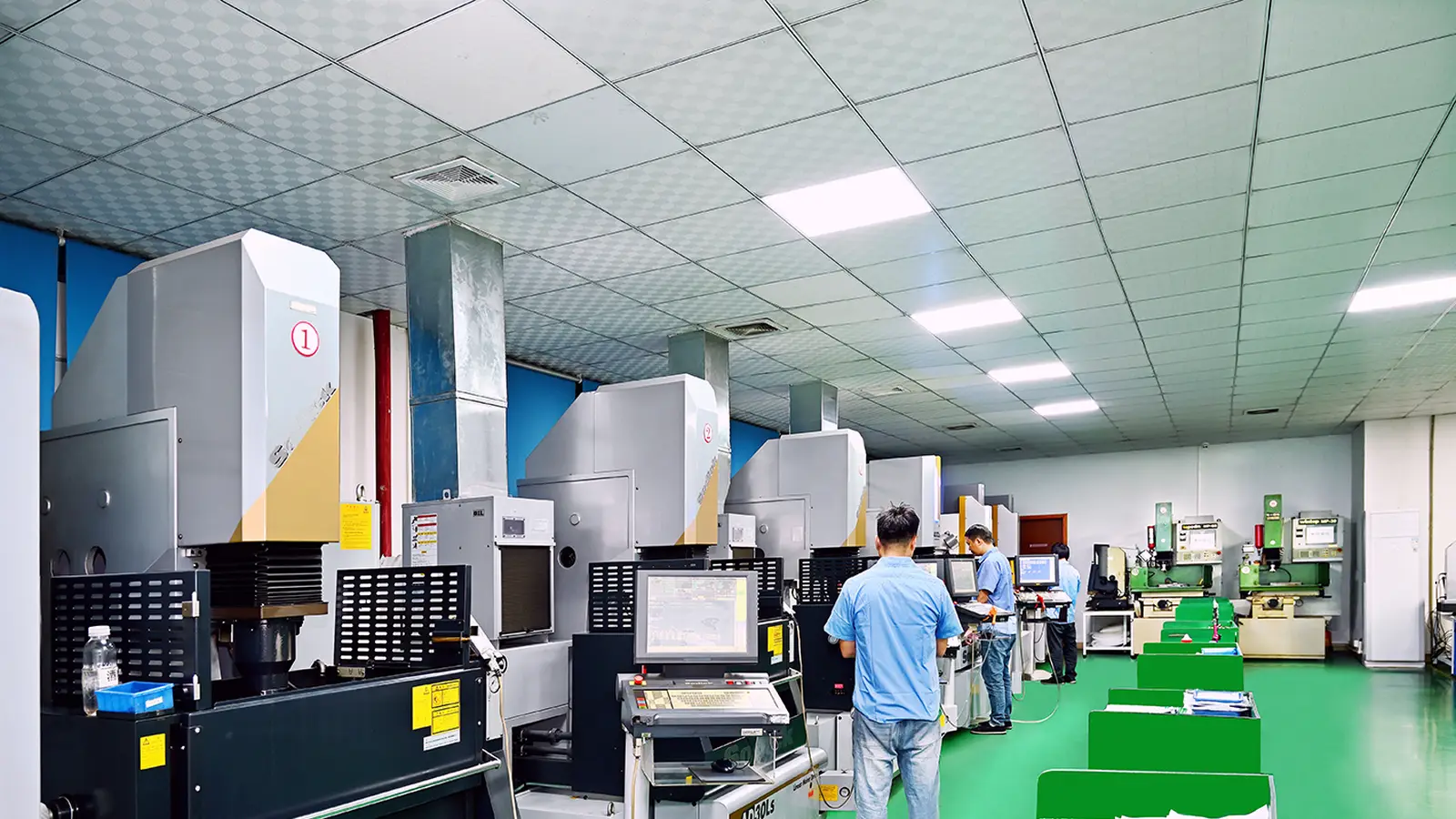
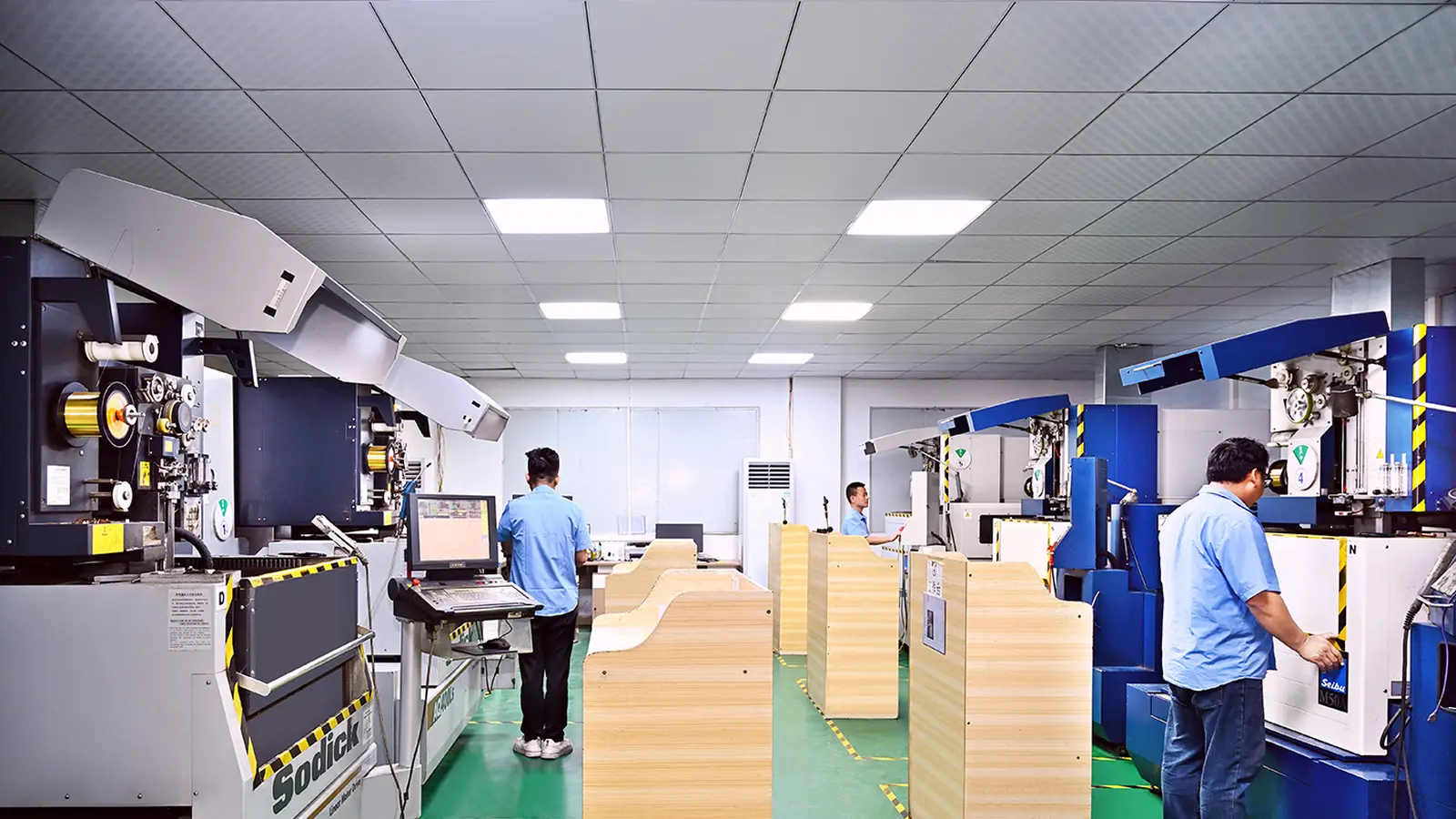
Electrical discharge machining (EDM) is the related thermal process — spark erosion — which we run on-site for hardened-steel mold details and precision features that cutting tools cannot reach. Wire EDM cuts with a thin wire electrode, holding ±0.005 mm on hardened parts, which is why our tooling program uses it for cavity details. The comparison between EDM and ECM: EDM removes by melting (heat-affected zone possible), ECM removes by dissolution (no heat effect, but slower and tool-limited).
The selection rule: if the part is thin, fragile or needs no burrs, look at chemical machining; if it is hard, complex-contoured and needs no stress, look at ECM; everything else belongs on the mill. Our 5-axis vs 3-axis article covers the mechanical side of the same decision. For market context, full-service machining shops list CNC, wire EDM and surface finishing under one quality system (.
If your part is fighting burrs, fragile geometry or hardened-material tool wear, send us the part and the problem. We will recommend the removal process that fits — and quote it. Contact us to start.
Need a quote? Contact us — upload your 3D file for a fast DFM review.
NEXT STEP
Ready to Start Your Project?
Send us your requirements — our team responds within 24 hours. Pricing and a realistic lead time come with the reply.
Written by
Ray ChanExport Brand Manager · Injection Molding, Mold Making & DFM. Ray helps global importers and integrators source factory-direct plastic parts and tooling.